
[Assistive Standing Devices: An Innovative Solution to Enhance Care Quality and Training Outcomes]
With the growth of the elderly population and the increasing demand for long-term patient care, both caregivers and care recipients face mounting challenges in daily life. One of the most difficult moments is when a care recipient needs to transition from a sitting to a standing position—a process that requires significant physical effort from the caregiver and often leads to long-term physical strain and fatigue.
To alleviate these burdens, assistive standing devices have emerged as an ideal solution, enhancing both the effectiveness of care and overall comfort.
With the growth of the elderly population and the increasing demand for long-term patient care, both caregivers and care recipients face mounting challenges in daily life. One of the most difficult moments is when a care recipient needs to transition from a sitting to a standing position—a process that requires significant physical effort from the caregiver and often leads to long-term physical strain and fatigue.
To alleviate these burdens, assistive standing devices have emerged as an ideal solution, enhancing both the effectiveness of care and overall comfort.
Model :
MW-111
[Assistive Standing Devices: An Innovative Solution to Enhance Care Quality and Training Outcomes]
With the growth of the elderly population and the increasing demand for long-term patient care, both caregivers and care recipients face greater challenges in daily life. One of the most difficult moments is when a care recipient needs to transition from a sitting to a standing position—a process that requires significant physical effort from the caregiver and often leads to long-term physical strain and fatigue.
To alleviate these burdens, assistive standing devices have emerged as an ideal solution, enhancing both the effectiveness of care and overall comfort.
1. Device Overview
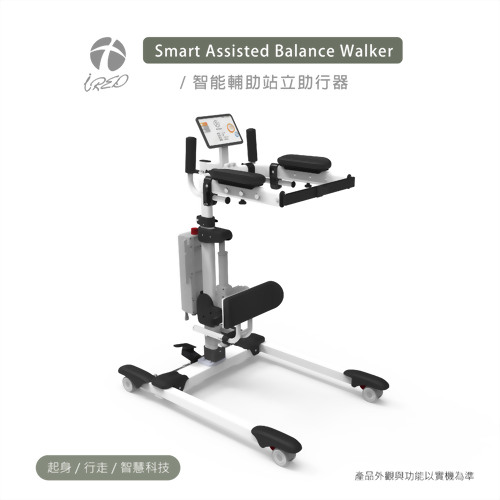
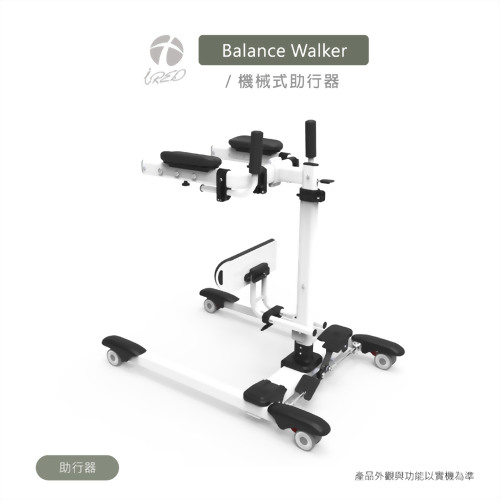
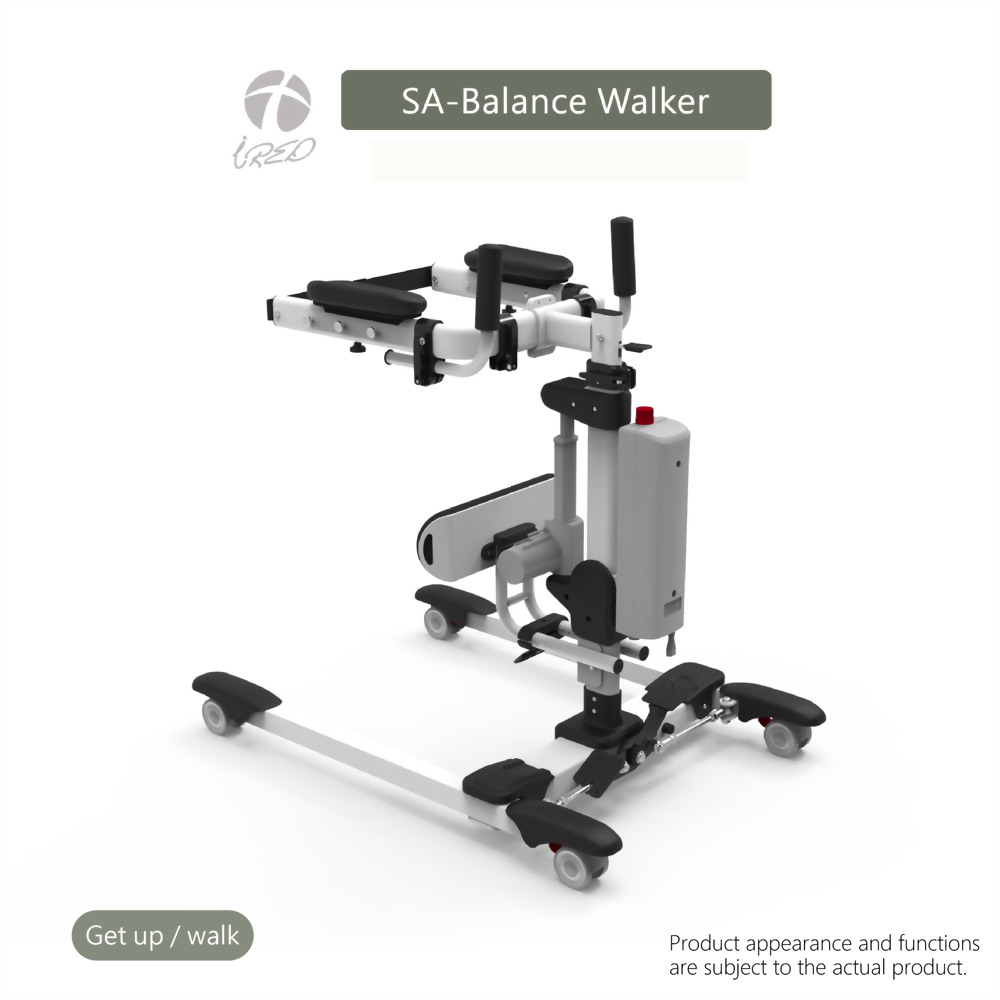
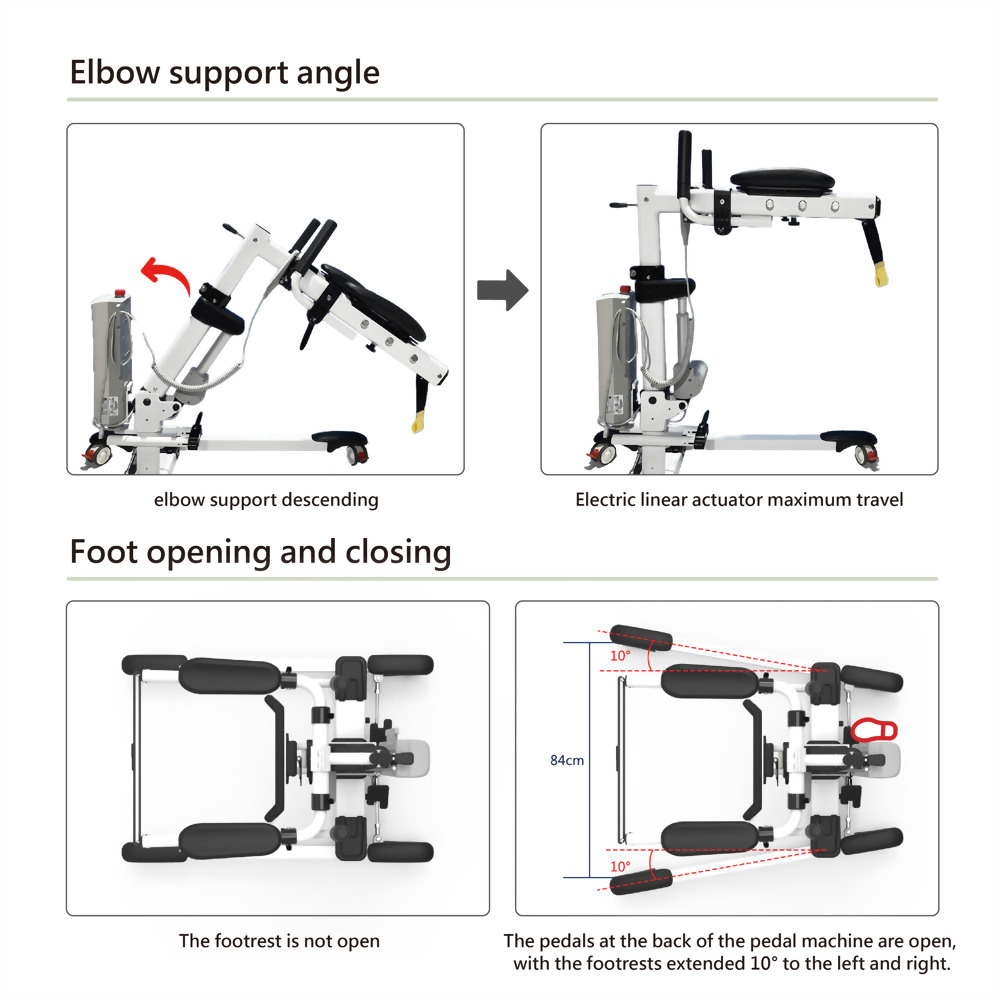
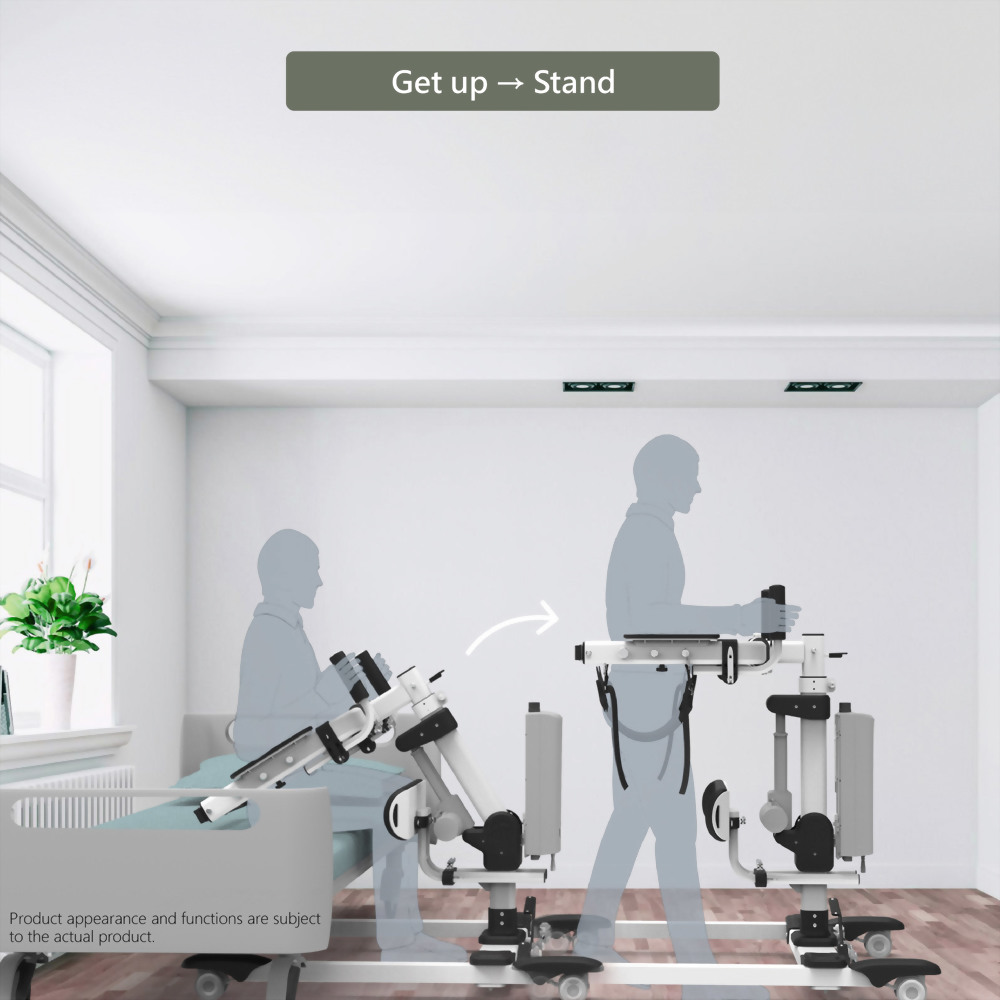
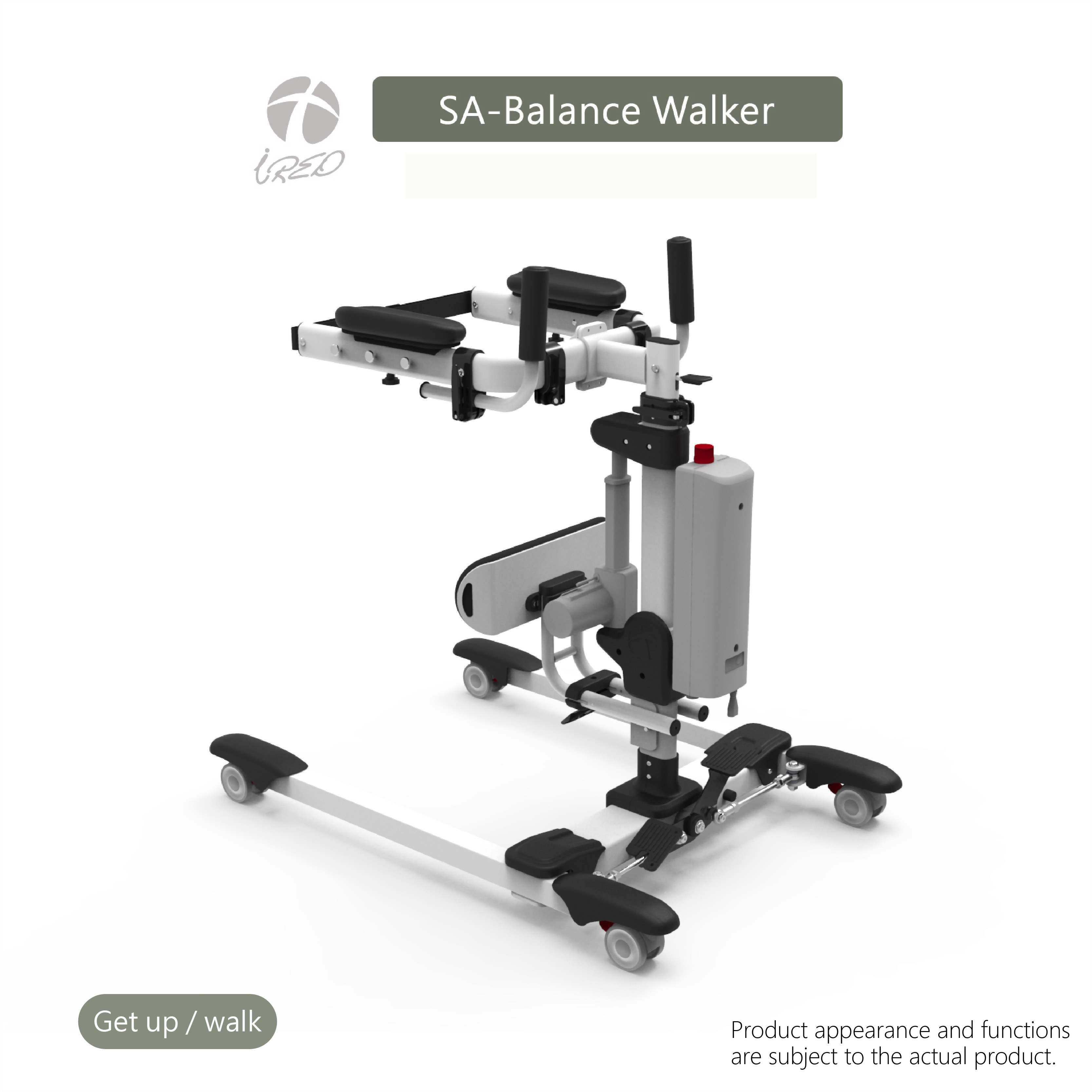
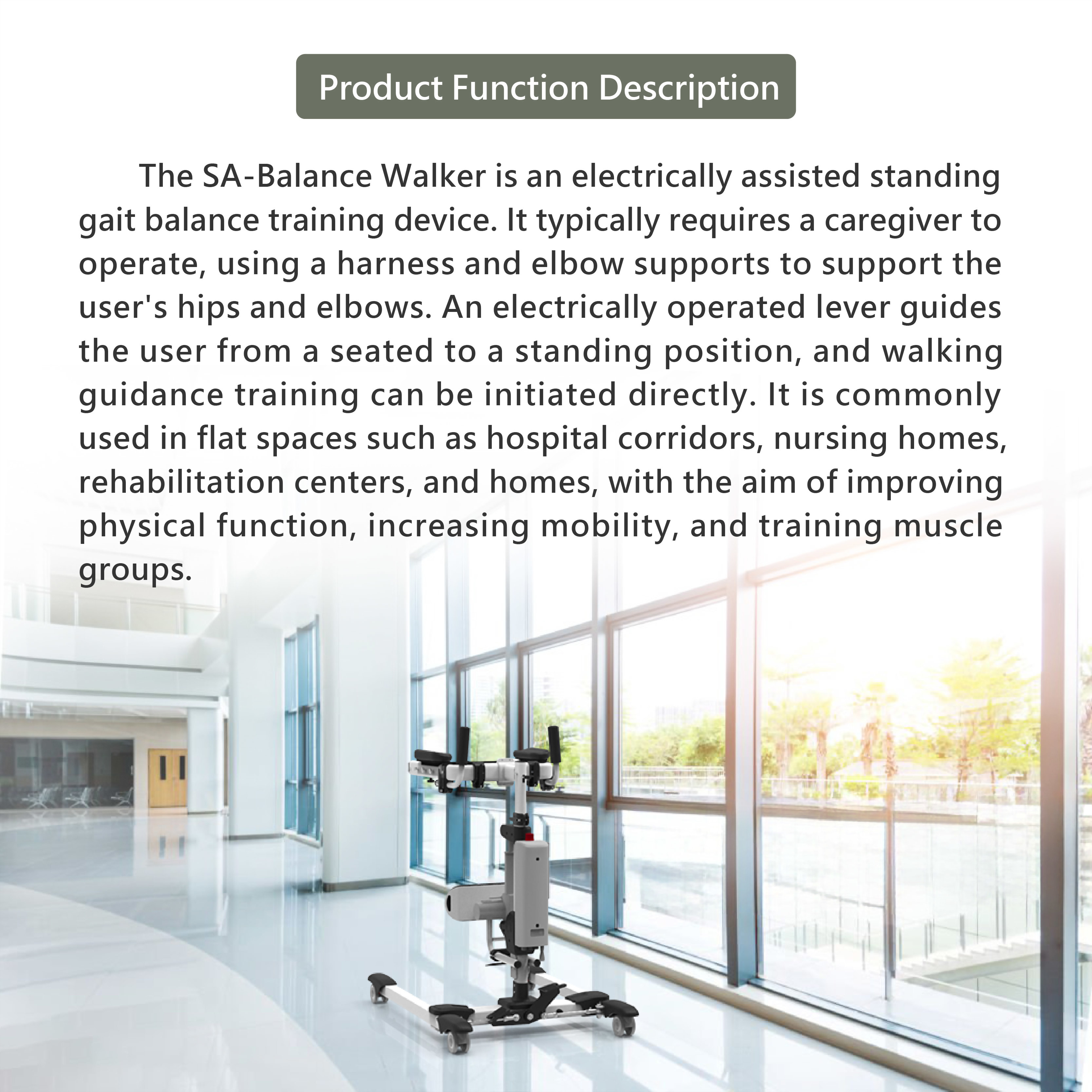
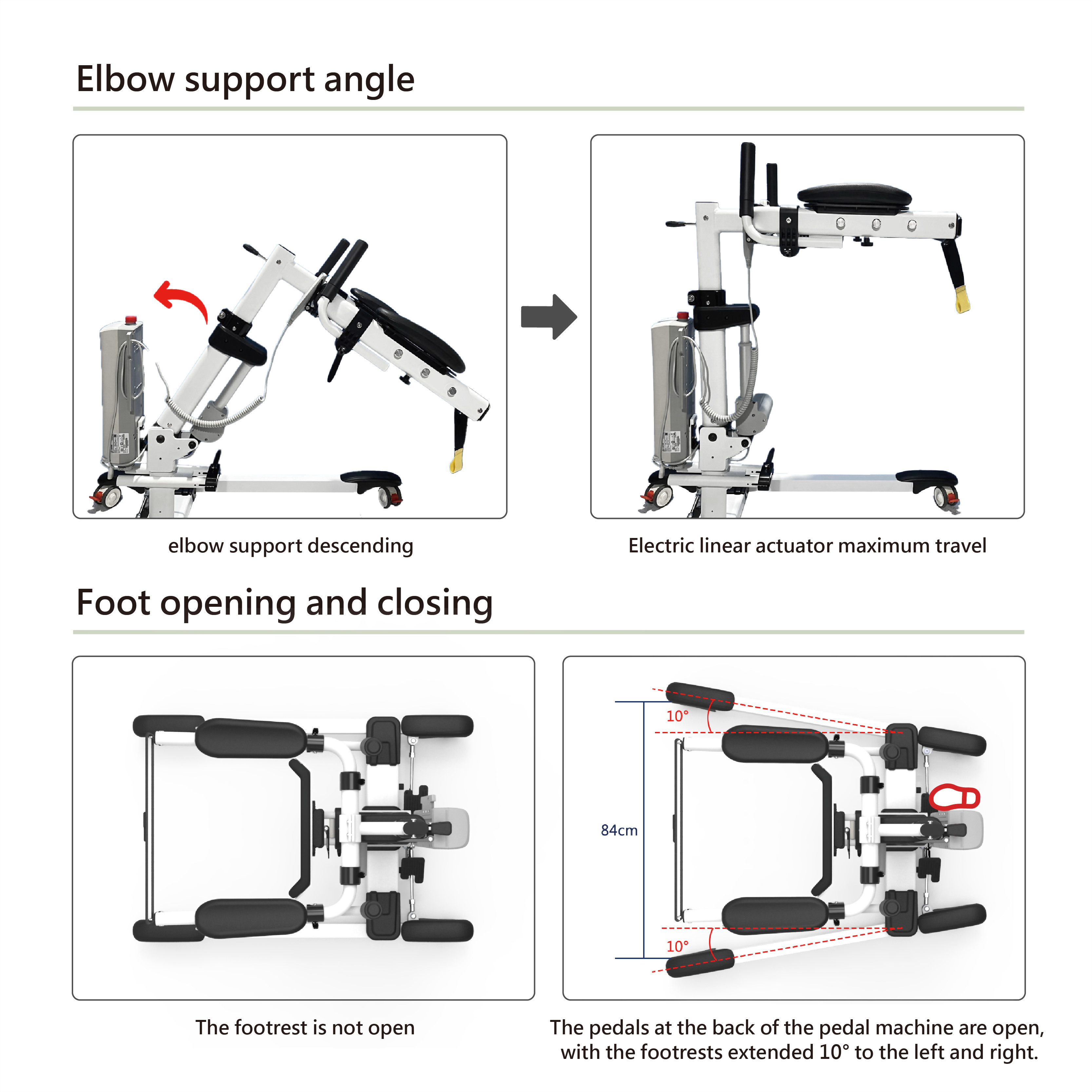
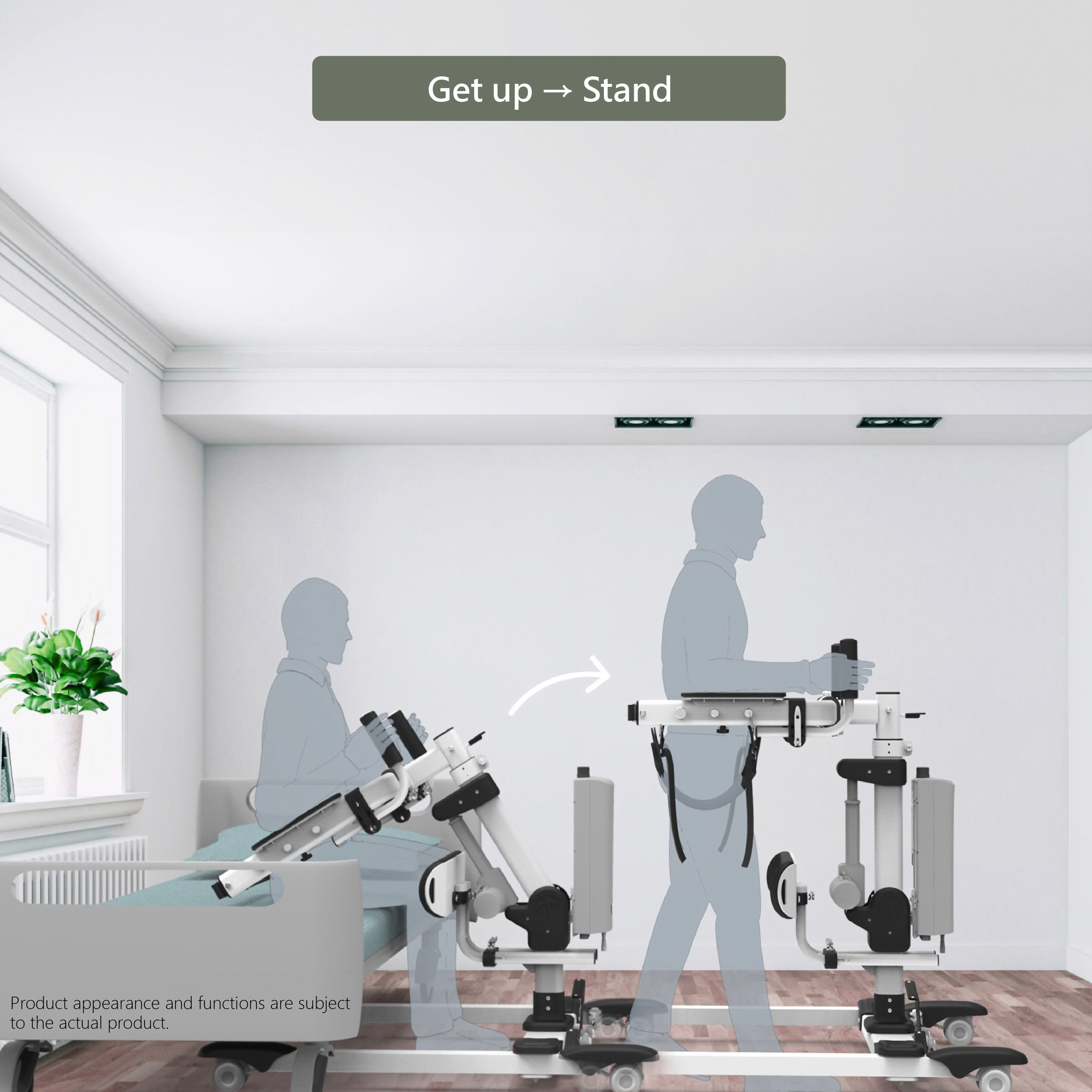
The assistive standing device is specifically designed for elderly individuals or patients in need of long-term care. It supports the smooth transition from sitting to standing and enables walking training once the user is upright. At its core, the device features an electric cylinder system, which automatically adjusts the device’s angle to assist the user in standing up. This design effectively reduces physical strain on caregivers while ensuring comfort and safety for the user.
2. Training Process and Functions
The operation of the assistive standing device is mainly divided into the following steps:
-
Standing Training:
Supported by the electric cylinder system, the device gradually helps the user transition from a sitting to a standing position. This process effectively trains leg muscles, providing opportunities for those who are bedridden or have limited mobility to gradually adapt. -
Leg Strength Training:
During the standing process, the device minimizes excessive pressure on the user’s legs. This allows the user to train their leg muscles in comfort, gradually improving their ability to stand and walk. -
Walking Training:
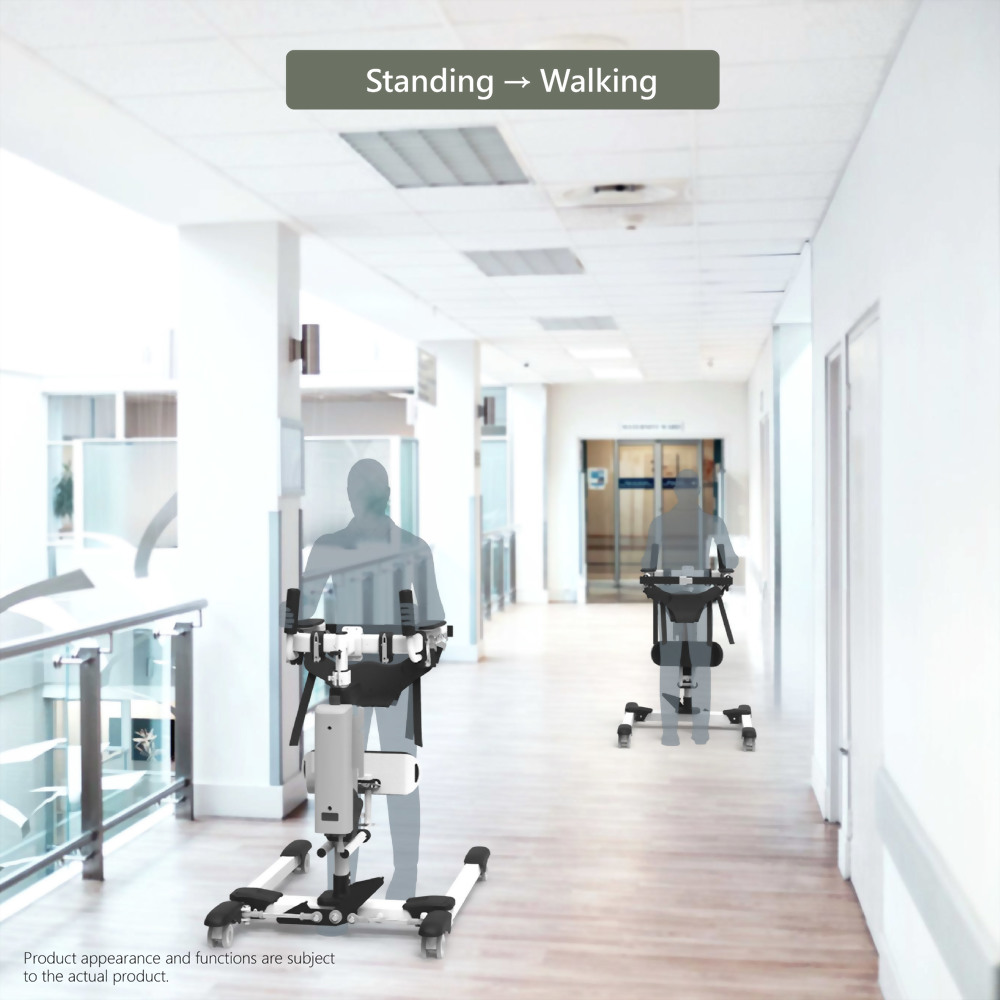
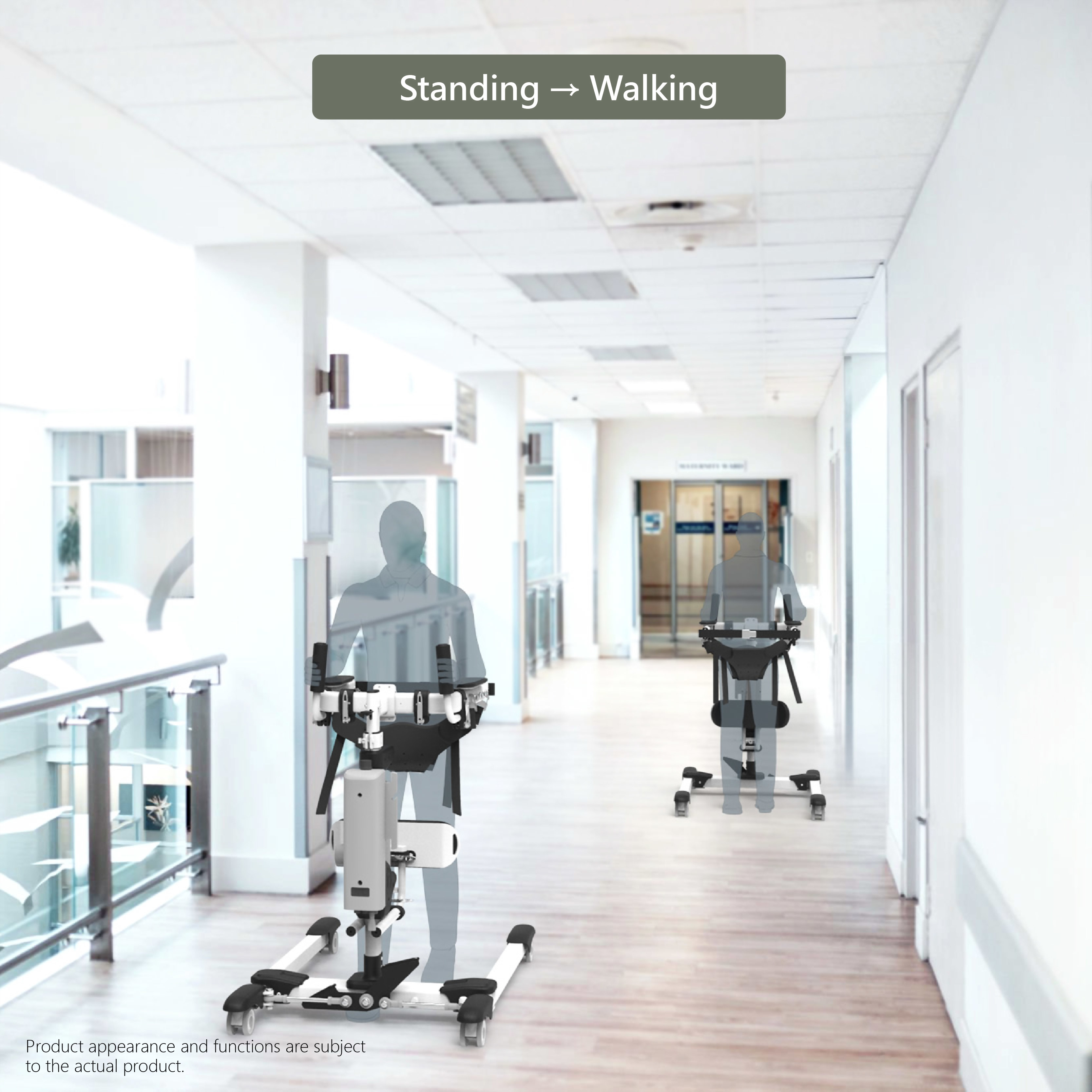
Once standing training is achieved, the user can proceed to slow walking exercises. This not only enhances independence in daily activities but also promotes blood circulation and overall health, reducing risks associated with prolonged physical inactivity.
3. Key Design Features
-
Electric Cylinder System:
The core component, the electric cylinder system, precisely adjusts the angle and position of the device, assisting the user through the transition from sitting to standing. The automated control system can be customized to the user’s specific needs while ensuring stability and safety. -
Harness and Knee-Block Design:
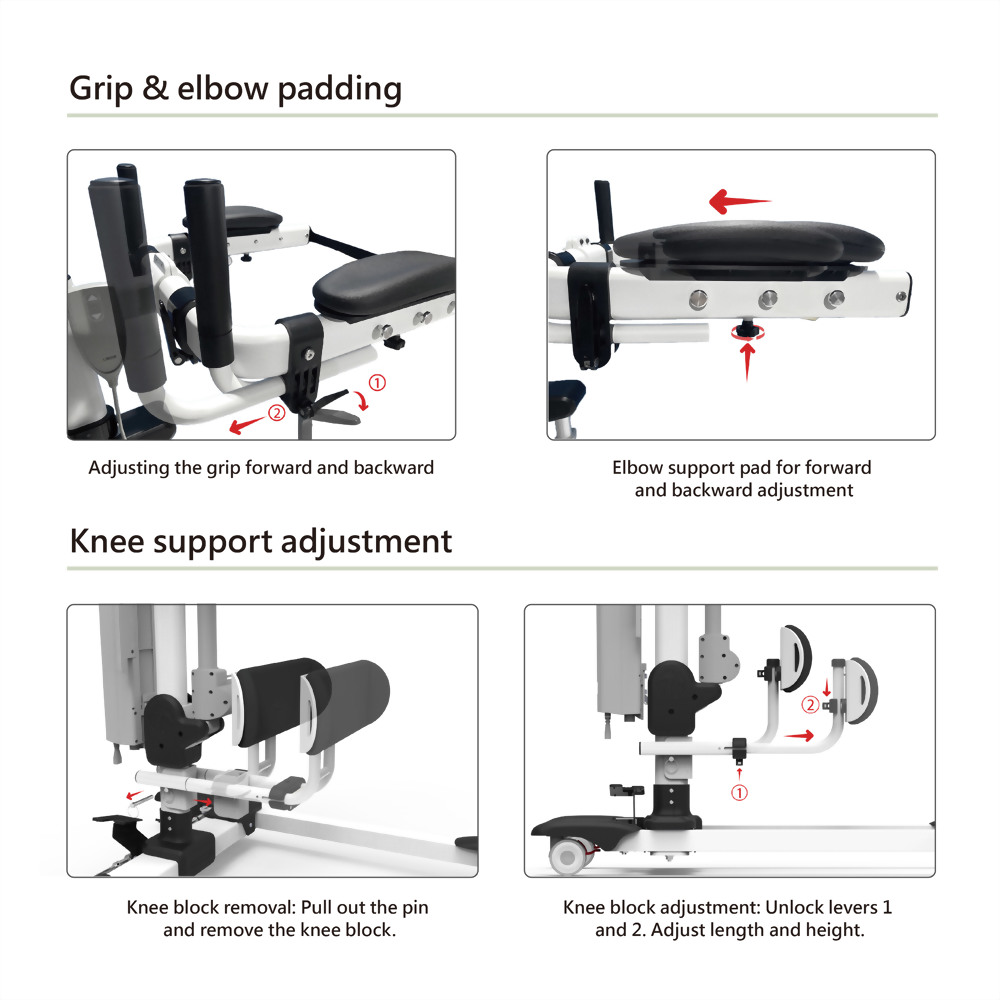
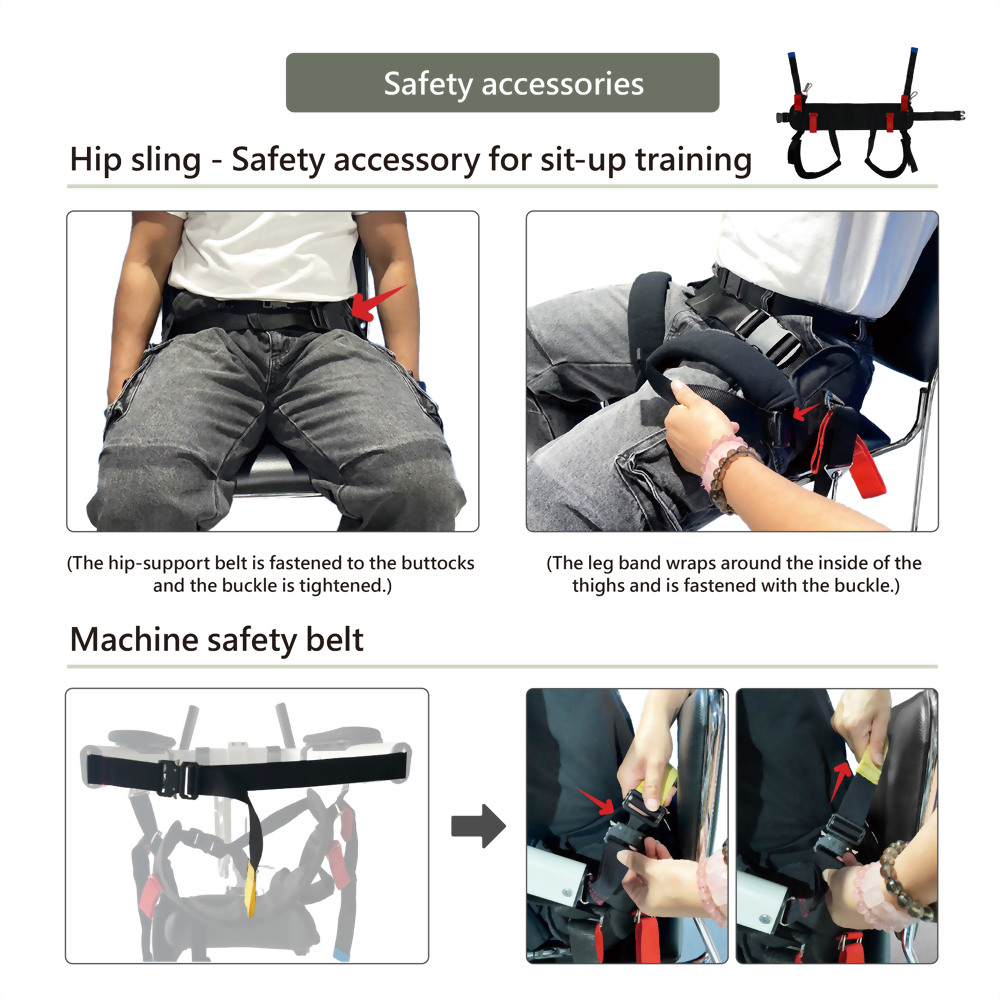
During training, the user wears a dedicated harness, and the legs are secured against knee blocks. This design reduces leg pressure, improves comfort, and provides additional stability, preventing unnecessary movement and ensuring greater safety. -
Comfort and Safety:
Because the user’s legs are not subjected to excessive pressure during the standing process, even long-term bedridden patients can train without added pain, significantly improving both comfort and safety.
4. Support and Relief for Caregivers
For caregivers, the assistive standing device greatly reduces the physical burden of daily care. Whether providing assistance in standing up or maintaining standing support, the device’s automated system minimizes the caregiver’s direct involvement. This reduces repeated bending and lifting, thereby easing back and waist strain and effectively preventing fatigue and soreness caused by prolonged physical exertion.
5. Conclusion
In summary, the assistive standing device is not only an innovative caregiving tool but also an effective means of improving user independence and quality of life. For caregivers, it provides much-needed convenience, reducing physical workload and preventing care-related fatigue.
The introduction of such devices represents an important innovation in the field of long-term care and deserves widespread application in various caregiving settings, offering better life support and security to those in need.
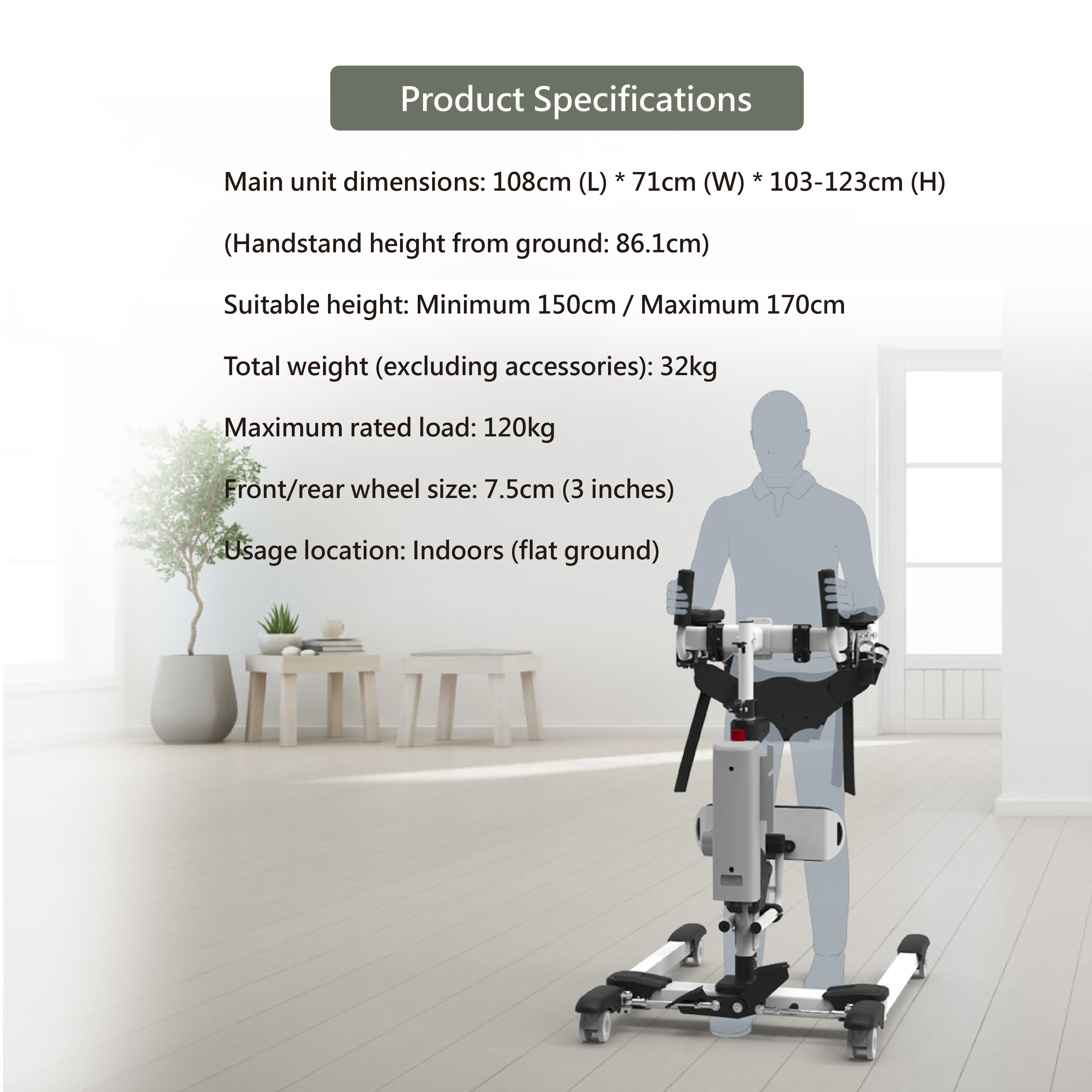
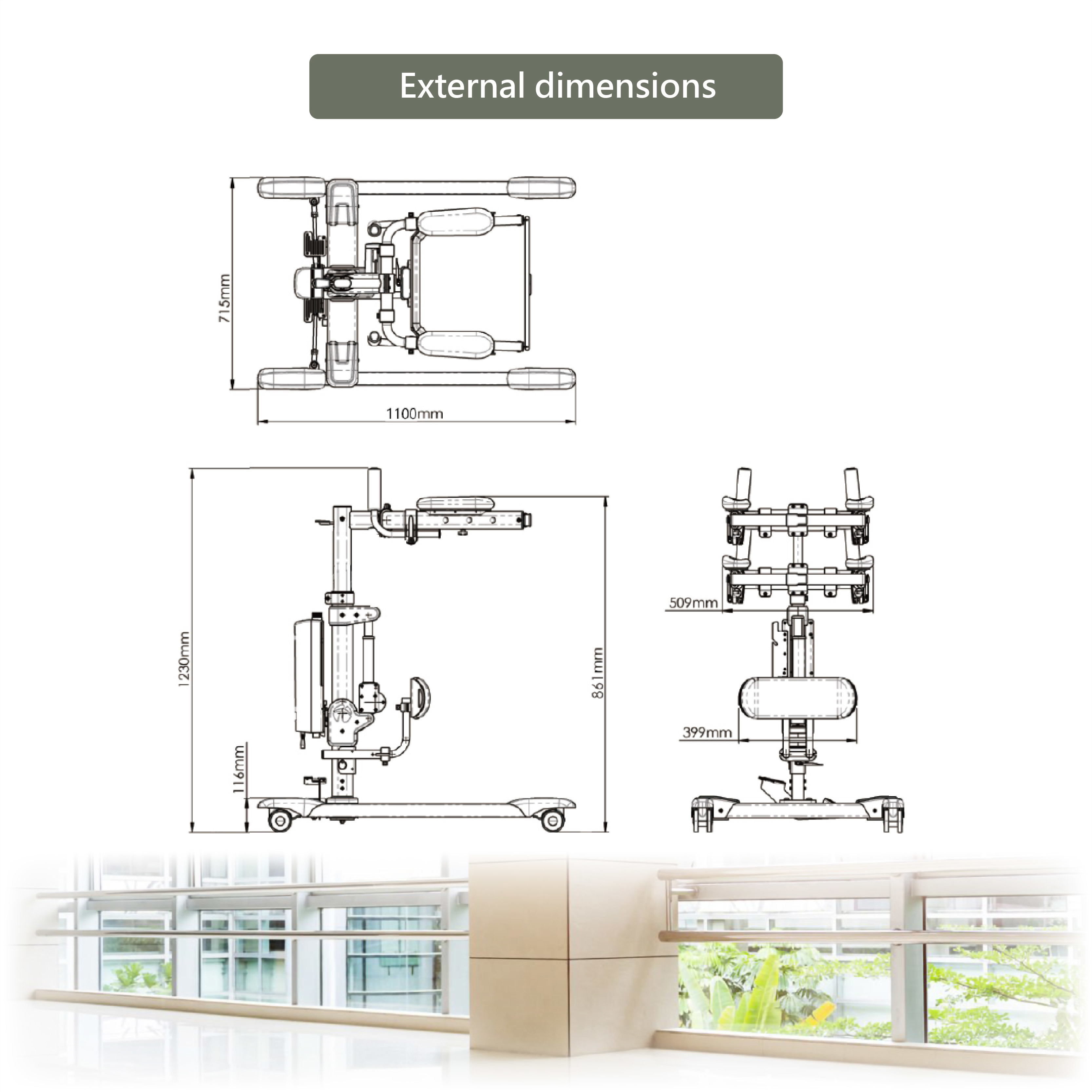
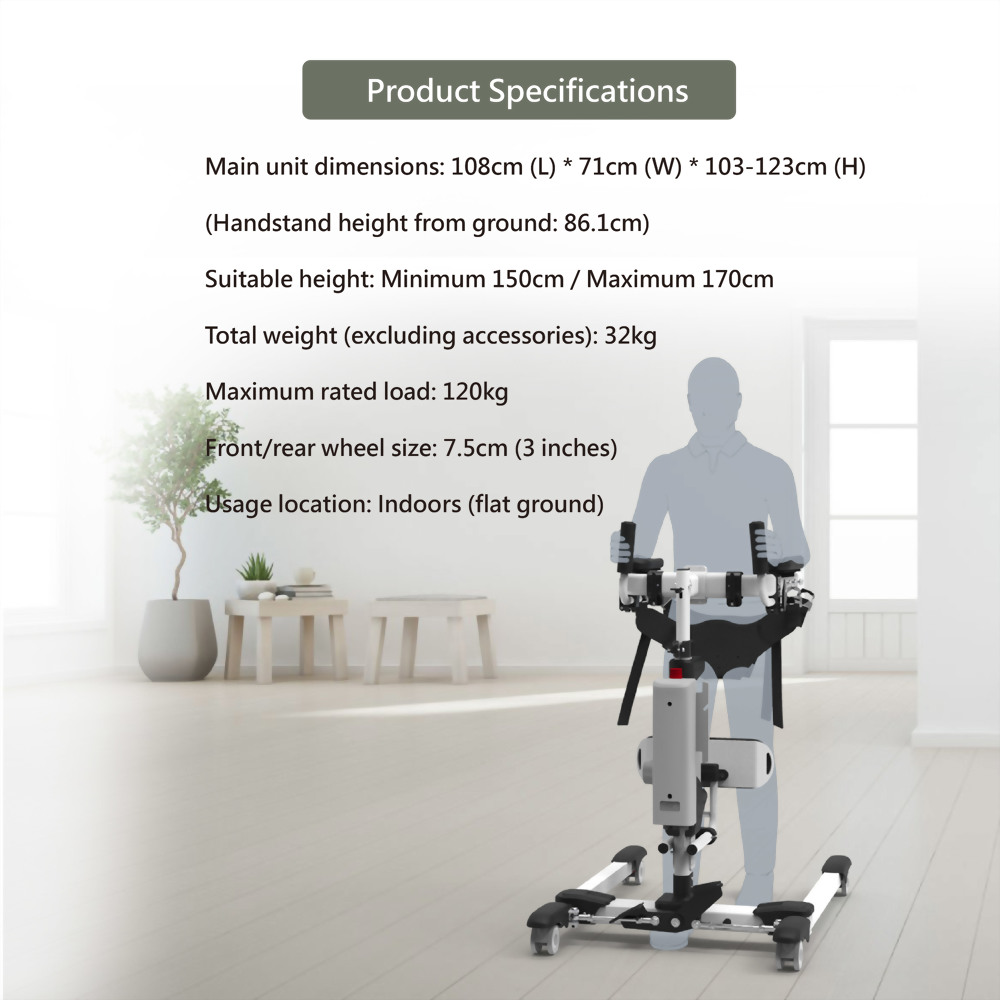
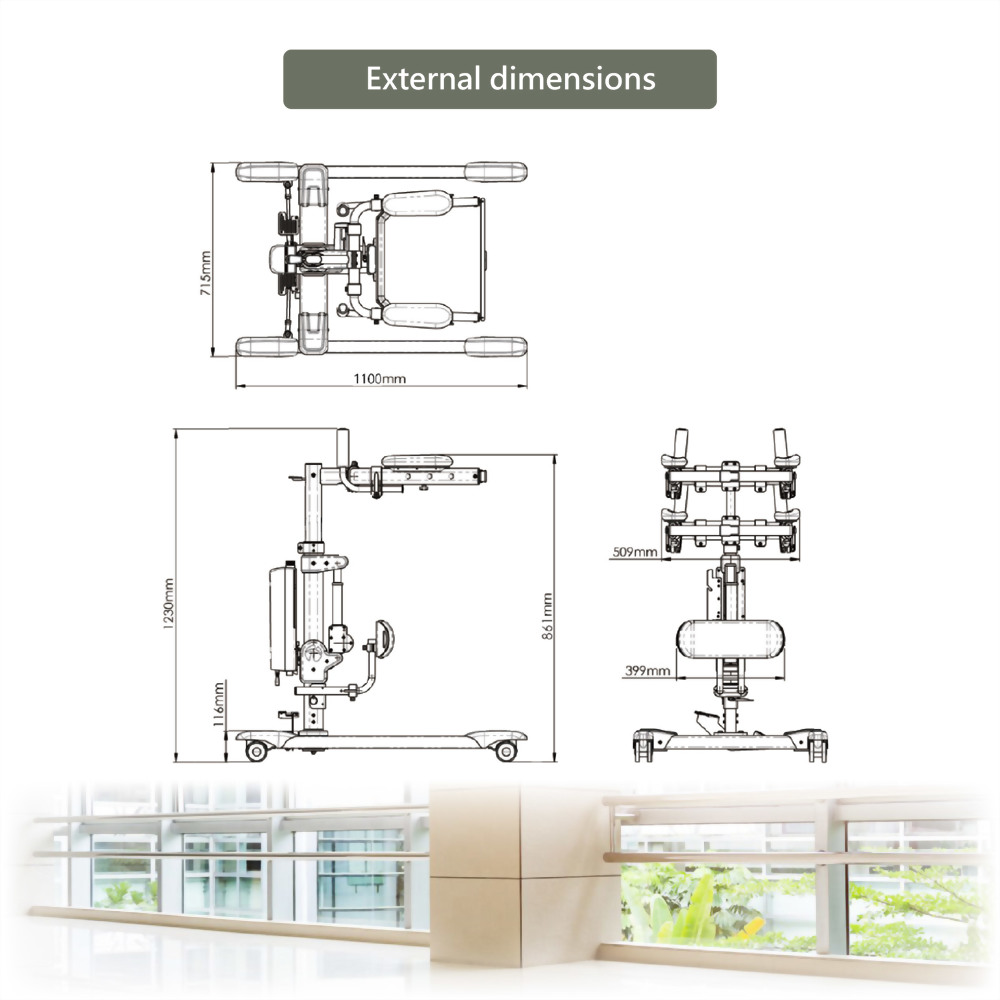
Main Unit Dimensions: L 107.5 × W 71 × H 123 cm
Applicable User Height: Min. 150 cm / Max. 180 cm
Lifting Speed: 3.2 mm/s (loaded) / 39 mm/s (unloaded)
Net Weight (excluding accessories): 30 kg
Maximum Rated Load: 120 kg
Front/Rear Wheel Size: 7.5 cm (3 inches)
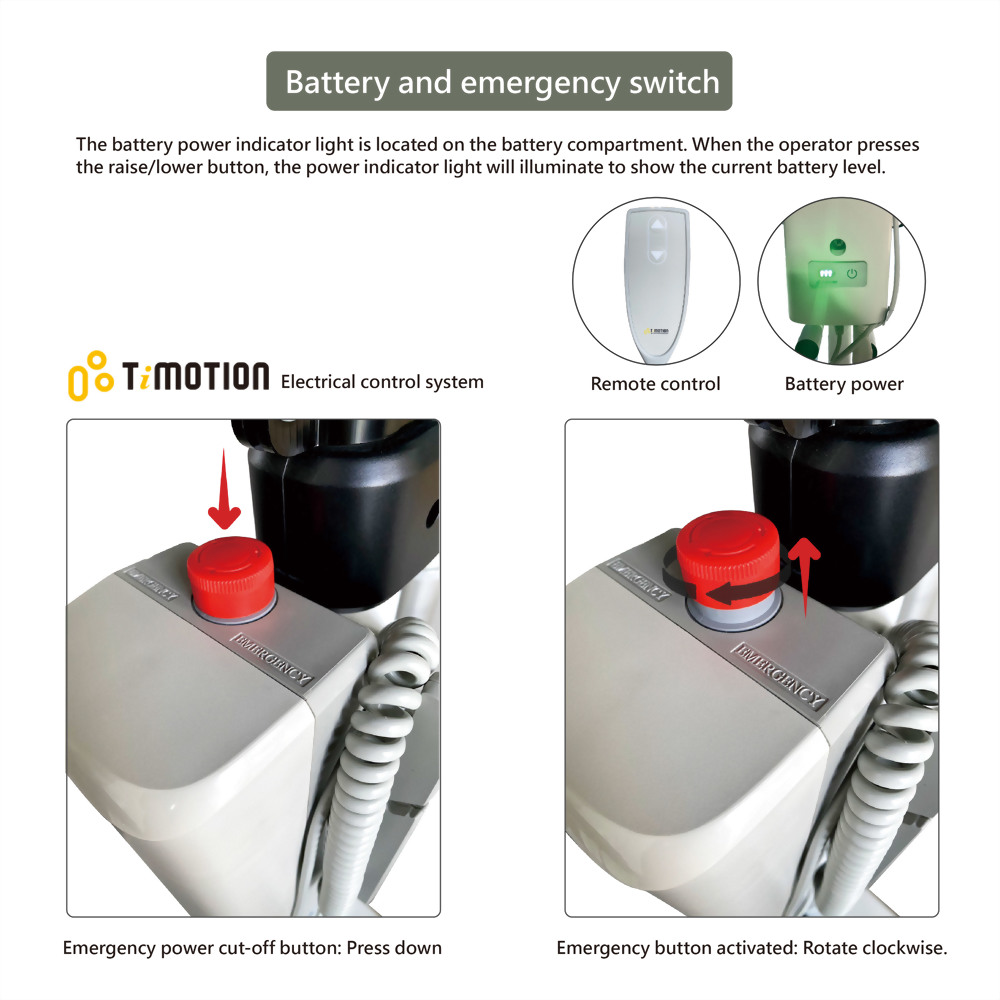
Battery Power Supply: 24 VDC
Sit-to-Stand-to-Gait Training
-
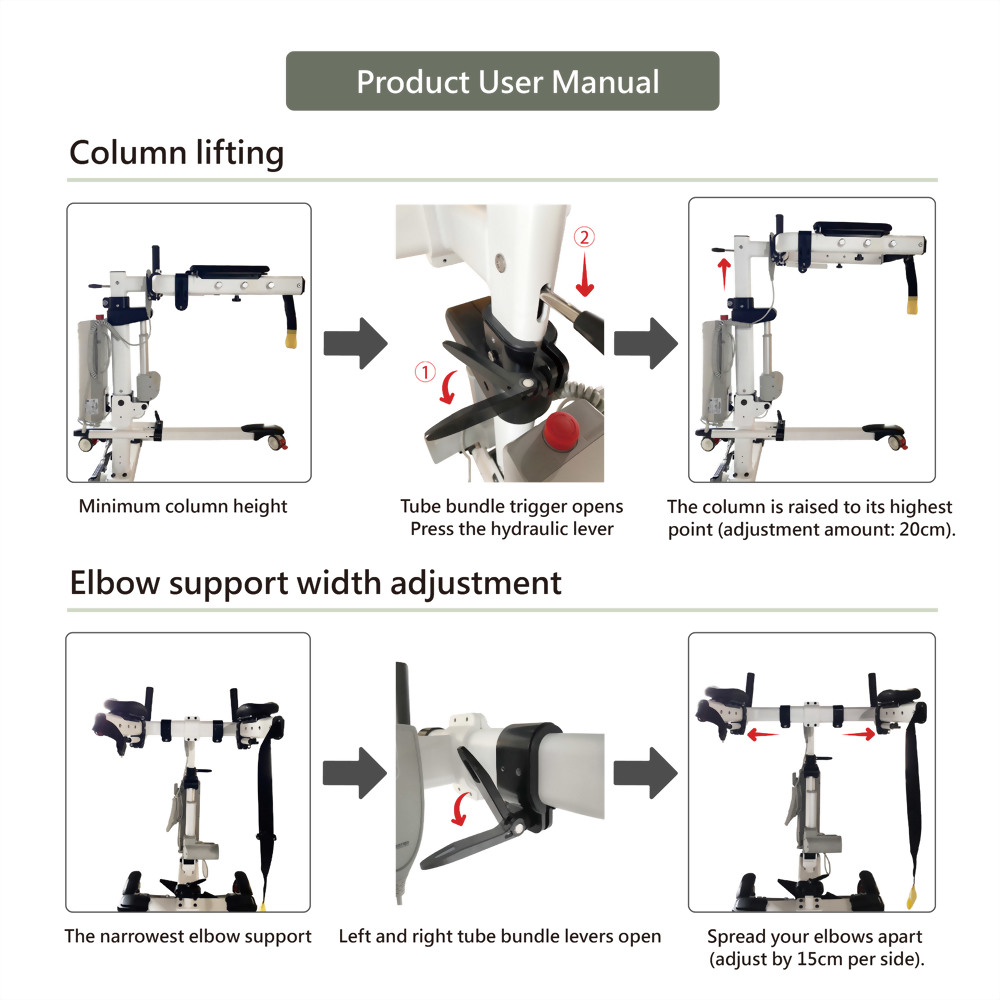
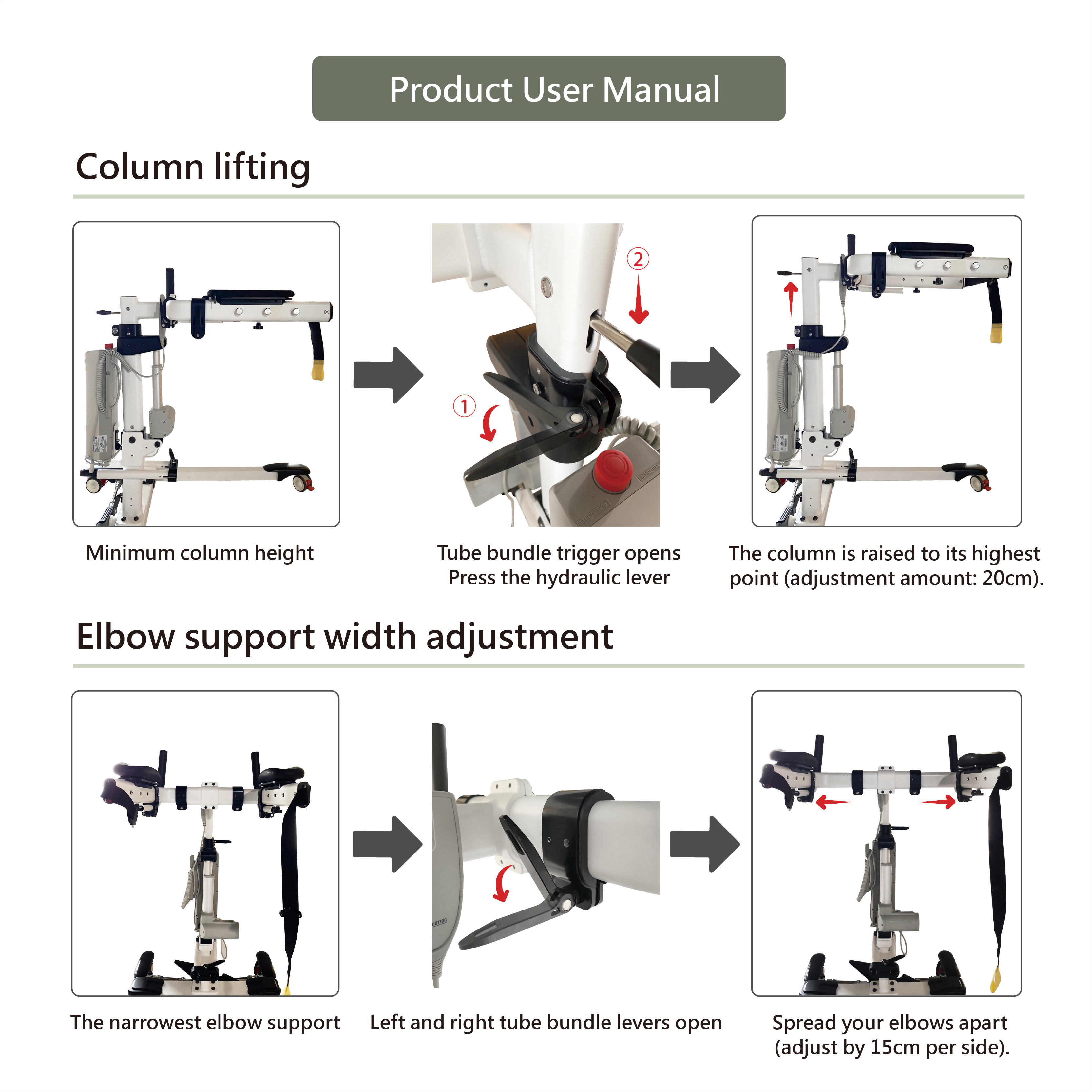
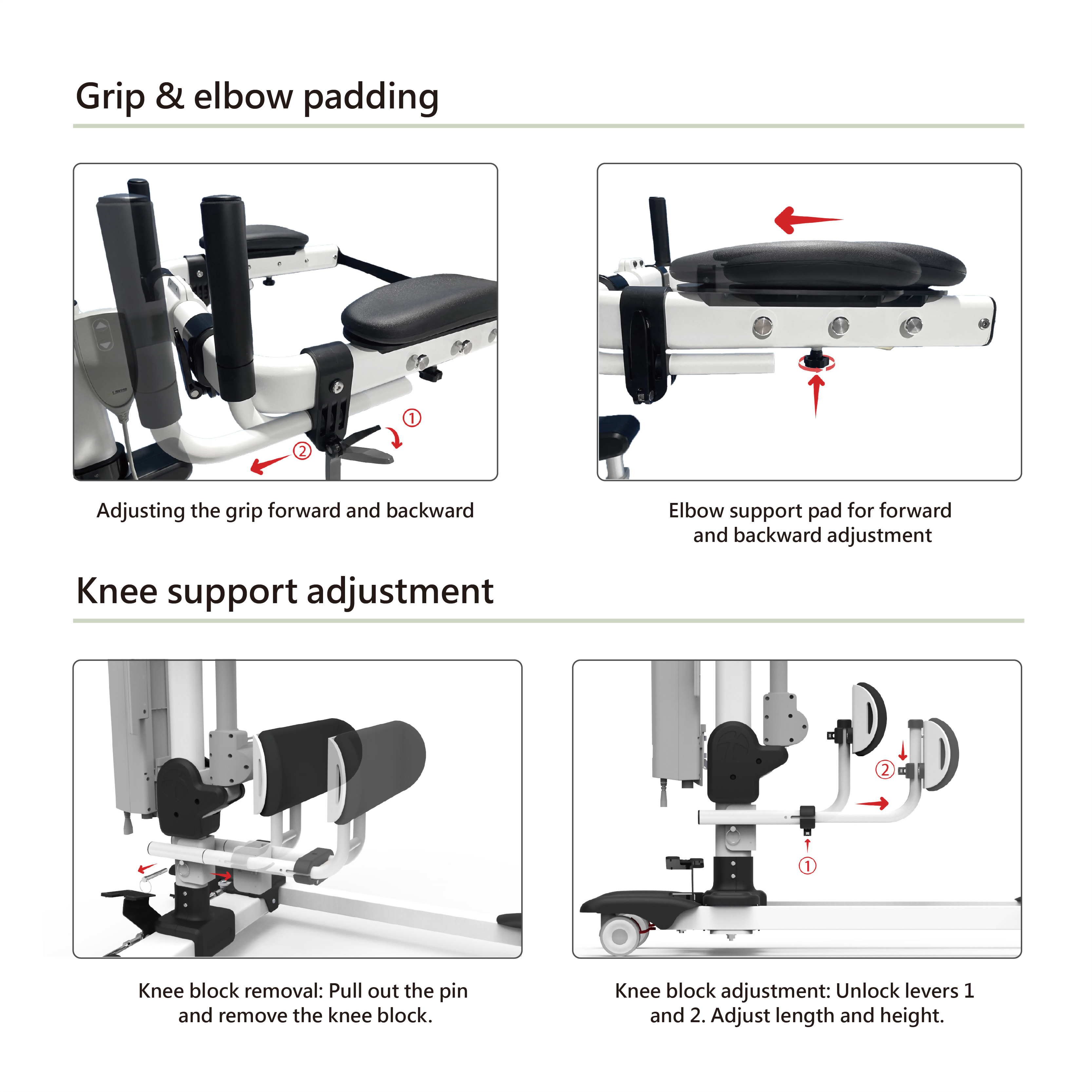
Adjustable handles, forearm supports, and knee blocks, suitable for most users.
-
Detachable knee block: easy to remove during gait training and reduces overall weight.
-
Low-profile base with 3-inch wheels allows access under hospital beds for convenient use.
-
Base with open/close design, making it wheelchair-friendly.
-
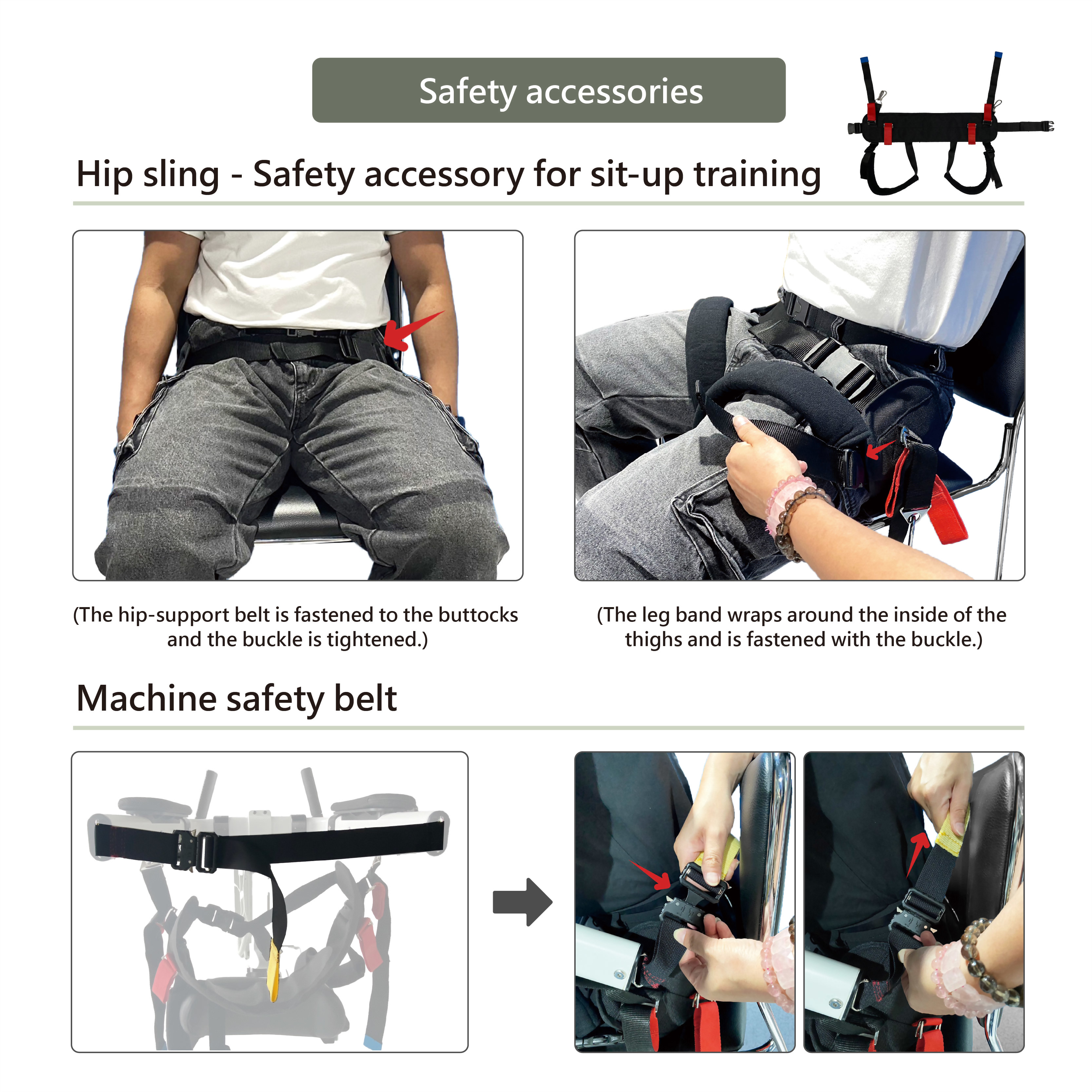
Equipped with hip sling and safety support belts, providing users with secure and安心 care.
-
Made in Taiwan (MIT).